
In China, SIPO grants design patents after preliminary examination, without substantive examination. This may leave the resulting rights vulnerable and has been accompanied by increasing invalidation proceedings and litigation. Drawing on the Patent Law, the examination guidelines and our practice, this article discusses points to consider when filing, with a view to effective enforcement.
1. Conduct a design search
A search is an effective way to reduce risk. Two questions deserve particular attention.
(1) Is the design already a prior design, meaning a design publicly known in China or elsewhere before the filing date, or the priority date where priority is claimed? This is the novelty requirement.
(2) Does it conflict with another person’s lawful rights acquired before the filing date? These are rights or interests enjoyed under Chinese law and valid on the filing date of the design in question. They include trademark rights, copyright, rights in enterprise names and portraits, and rights to use the distinctive packaging or decoration of well-known goods.
In practice, applicants sometimes incorporate another person’s registered trademark or work into all or part of their designs without permission.
2. Combine designs in one application where permitted
The general rule is one design per application. Article 31(2) of the Patent Law, following the third amendment, allows two exceptions: two or more similar designs for the same product, and designs for products sold or used as a set. These are treated as one application, with one application fee.
2.1 Similar designs
The designs must concern the same product. Each additional design is compared separately with a designated basic design. Designs are regarded as similar where they have identical or similar design features and the differences consist only of minor local changes, customary features of that product type, repetition of a design unit, or changes in colour alone.
It is therefore advantageous to designate as the basic design the one that best expresses the design concept, reducing the differences between it and the other designs.
Separate applications for several similar designs by the same designer may create a double-patenting issue. A combined application can avoid that issue. If the designs are filed separately and a third party challenges them on double-patenting grounds, only one design right may be retained.
2.2 Products forming a set
A set consists of two or more independent products in the same main classification, sharing a design concept. Each product has independent utility, and their combination also has utility. A coffee set comprising cups, a coffee pot, a milk jug and a sugar bowl is an example.
An application for a set must not include two or more similar designs for one or more of its component products.
3. Consider the relationship between a component and the whole product
Under the principle of overall observation and comprehensive assessment used in invalidation proceedings, it may be appropriate to file for the design of an individual component. If the distinctive design lies in the component itself, the application should treat that component as the complete product, rather than seek protection for the entire device containing it.
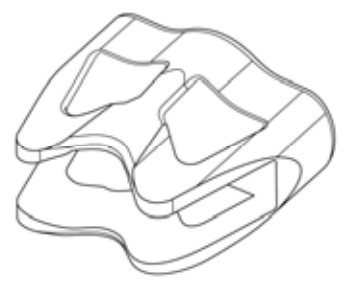
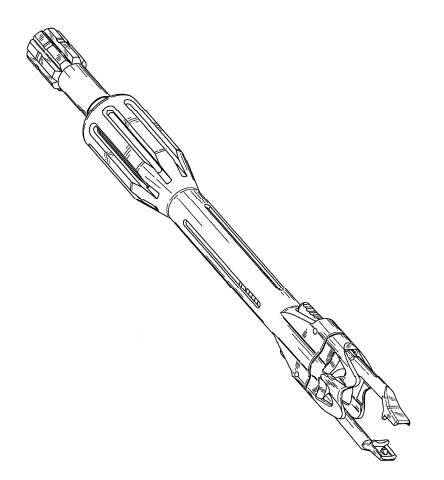
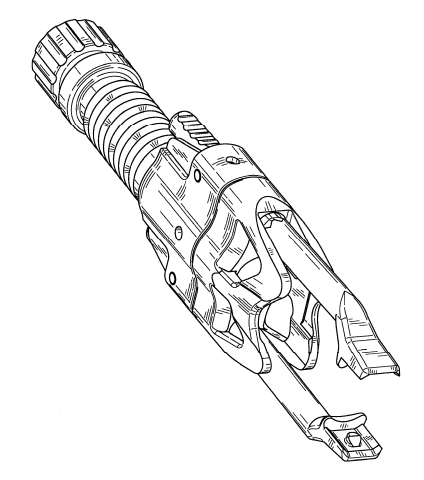
Figure 1 shows a pusher used as a component of a rod reduction device for spinal surgery. The device is used to push a rod into the seat of an anchor attached to a vertebra. Figures 2 and 3 show two embodiments of a device incorporating the pusher.
The applicant initially intended to file for both embodiments. In each, however, the distinctive design lay in the pusher shown in Figure 1. The two complete devices did not satisfy the requirements for similar designs and could not be combined in one application. Filing separately would also restrict the scope of protection. We therefore recommended filing for the design of the pusher itself.
4. Prepare the brief explanation
A brief explanation is a required document for a Chinese design application. This differs from some other systems: for example, the European Union does not require a brief explanation when filing a design application.
The explanation supplements matters that cannot be accurately expressed in the drawings or photographs. It includes the product’s name, its intended use and the essential features of the design, and must identify the drawing or photograph that best shows those features.
(1) The intended use helps determine the product’s classification, particularly for products with several uses.
(2) The essential features are an important part of the explanation. They identify the principal differences between the design and prior designs. A new design generally incorporates some existing design elements as well as elements that are neither identical nor similar to prior designs. The latter represent its creative contribution. Describing the essential features helps readers distinguish the design from earlier designs and understand its innovative aspects.
In Chinese practice, the essential features submitted by the applicant may be considered in assessing infringement. The corresponding prosecution file may be used as evidence in litigation to identify those features.