Article 8 of the Trademark Law described in this article permits registration of visual signs capable of distinguishing one person’s goods or services from those of others, including words, designs, letters, numbers, three-dimensional signs, colour combinations and combinations of these elements. A composite mark combines different elements, such as wording and a design.
1. Identical composite marks
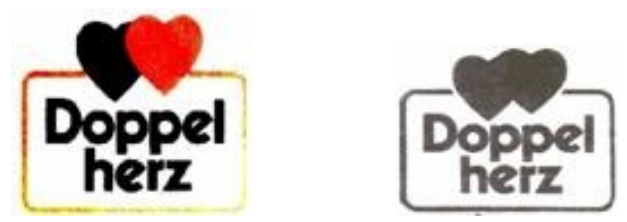
Composite marks are treated as identical where their wording, figurative elements and arrangement produce no difference, or only a negligible difference, in pronunciation and overall appearance, creating a likelihood of confusion about the source of the goods or services. The Doppelherz pair in Example 1 illustrates this.
2. Similar composite marks
Similarity may result from identical or similar verbal or figurative elements, or a similar overall structure, where the relevant public is likely to be confused. The relevant public includes consumers of the goods or services, other producers or service providers, and sellers and others involved in their distribution.
(1) Chinese wording
Marks with identical or similar Chinese wording may be considered similar if confusion is likely. Example 2 shows 风度猫, meaning “style cat”; FENGDUMAO is its Chinese pronunciation in pinyin.
(2) Foreign words, letters or numbers
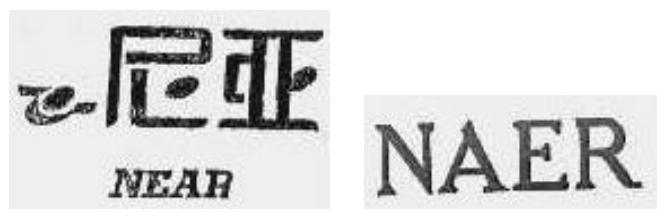
Identical or similar foreign wording, letters or numbers may lead to a finding of similarity where confusion is likely, as in Example 3. However, if the marks’ overall pronunciation, meaning or appearance is clearly different and confusion is unlikely, they are not treated as similar. Example 4 illustrates this exception.
(3) Words in different languages
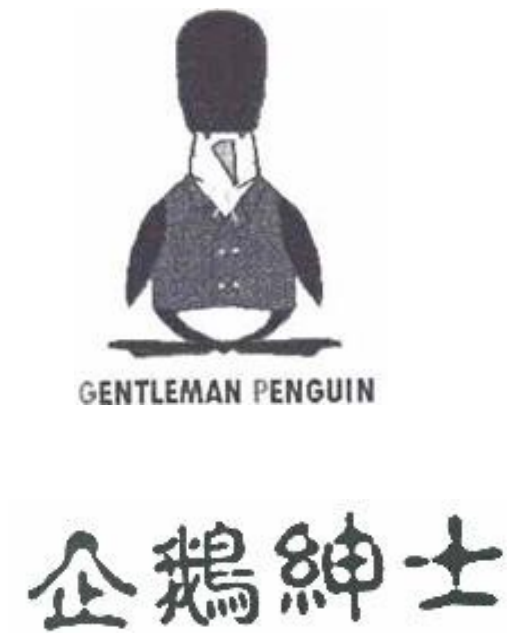
Words in different languages with the same or substantially the same meaning may make marks similar if confusion is likely. Example 5 compares GENTLEMAN PENGUIN with 企鹅绅士, meaning “penguin gentleman”.
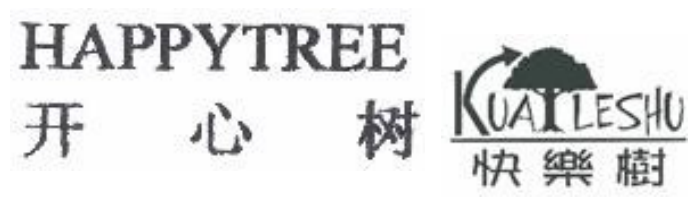
Again, clear differences in overall pronunciation, meaning or appearance may prevent confusion and a finding of similarity. Example 6 illustrates this exception.
(4) Figurative elements
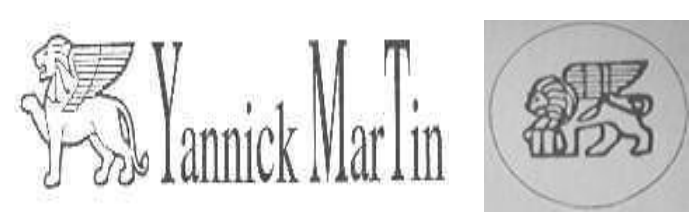
Identical or similar figurative elements may make marks similar where confusion is likely, as in Example 7.
An exception applies where the figure is commonly used for the goods, or serves mainly as decoration or background and has weak distinctiveness, while the marks as a whole differ clearly in pronunciation, meaning or appearance and are unlikely to confuse the public. Example 8 illustrates this.
(5) Overall combination or meaning
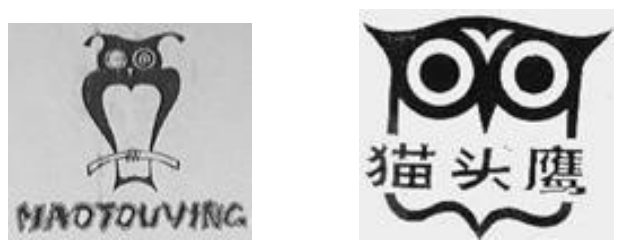
Even where the words and figures are not directly similar, their combination or overall representation may refer to the same thing. If this creates similar overall appearances or meanings and likely confusion, the marks may be considered similar. In Example 9, both MAOTOUYING and 猫头鹰 refer to an owl; the former is the Chinese pinyin spelling and the latter the Chinese characters.
3. Consider separate applications for the elements
The individual elements of a composite mark are examined separately. If a mark combines words and a design, refusal of either element may result in refusal of the entire mark. Filing the word and design elements separately allows them to be examined independently. If both are registered, they may still be used together.
Examples