Case Background
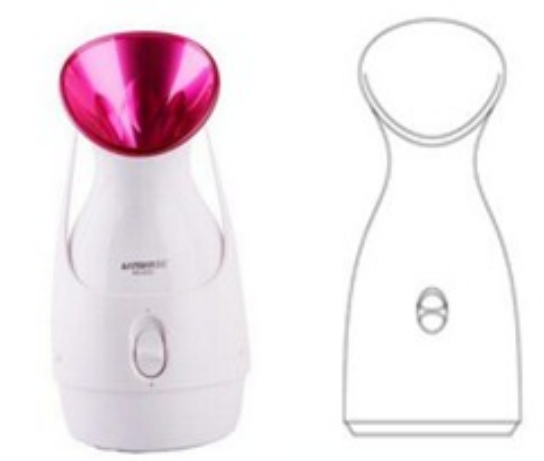
Panasonic obtained the design patent for a beauty apparatus on September 5, 2012, under publication number CN302065954S. It alleged that the Jin Dao ion steamer beauty apparatus KD-2331 infringed that patent. Zhuhai Jin Dao Electrical Appliance Co., Ltd. manufactured, sold and offered the product for sale, while Beijing Li Kang Fu Ya Trading Co., Ltd. sold it.
Panasonic asked the court to order both defendants to stop infringement, destroy related promotional materials and remove promotional content. It also sought destruction by Jin Dao of the moulds, specialized production equipment, inventory and unsold products retrieved from retailers. It claimed RMB 3 million (approximately USD 446,000) in economic losses from Jin Dao and RMB 200,000 (approximately USD 30,000) in reasonable expenses jointly from both defendants.
First Instance
The Beijing Intellectual Property Court held that the differences between the accused product and the patented design did not substantially affect their overall visual effects; they were similar designs. Jin Dao had manufactured, sold and offered the product for sale without permission, and Li Kang had sold and offered it for sale without permission.
The evidence established Jin Dao’s profits from sales and offers for sale. Panasonic had reasonable grounds for its RMB 3 million claim based on online sales volumes and average prices. Li Kang had continued selling after learning of the proceedings and therefore had to share the reasonable enforcement expenses with Jin Dao.
The court ordered both defendants to stop infringement, Jin Dao to pay RMB 3 million in economic damages, and both defendants jointly to pay RMB 200,000 in reasonable expenses.
Second Instance
Both defendants appealed to the Beijing High People’s Court. The court held that the accused product fell within the patent’s scope. Panasonic had obtained notarized search results from online retail platforms showing aggregate sales of 18,411,347 units for the accused model and an average price of RMB 260. Even a conservative estimate of profit, applied to the sales figures, produced a result substantially above RMB 3 million. The damages claim was therefore sufficiently reasonable, and the first-instance award had factual and legal support.
The High Court dismissed the appeals and upheld the judgment.
Significance
The Supreme People’s Court selected the case as one of the ten leading intellectual property cases heard by Chinese courts in 2016. It illustrates the rules for assessing evidence of an infringer’s profits.
The appellate court recognized that patentees may face difficulties proving damages because the relevant account books and records are generally controlled by the infringer. Where the rights holder has adequately explained the reasonableness of its damages claim and the infringer supplies no contrary evidence, the court may determine the infringer’s profits from the claim and evidence submitted by the rights holder.
Source: http://www.chinacourt.org/article/detail/2017/04/id/2822668.shtml