
1. Introduction
The 2017 amendments to the Guidelines for Patent Examination, particularly those concerning supplementary experimental data in chemistry, have prompted different interpretations. Did examination principles change, and how are they applied? Chinese examiners had already been considering supplementary data for several years. The amendment aligned the written rules with examination practice. The following cases illustrate that practice.
2. Examination Practice
Before amendment, sufficient disclosure was assessed on the original description and claims, and embodiments or experimental data submitted after filing were not to be considered.
After amendment, sufficient disclosure is still assessed on the original description and claims. Post-filing experimental data must be examined, but the technical effects it demonstrates must be obtainable by a person skilled in the art from the application’s disclosure.
Although this rule appears in the chapter on sufficient disclosure, it is also applied to other objections, including inventiveness. Supplementary data is not part of the original application and must therefore have an inherent connection with it through the technical effect. Effects obtainable from the disclosure include, but are not limited to, the following situations.
Situation 1: The Effect and Supporting Data Are Already Disclosed
The description expressly records the technical effect and corresponding experimental data. Those data may not directly compare the invention with a reference later cited during examination. Targeted comparative data may therefore be submitted to show that the application performs substantially better than the reference. Such data can demonstrate an effect already derivable from the original disclosure.
Example 1: Re-examination Decision No. 85462, January 22, 2015; application CN200980118768.6.
Claim 1 concerned a kit for treating lung cancer, comprising a first composition with 1–25 mg/day of sodium meta-arsenite and a second composition with 3–100 mg/m² of cisplatin.
Reference 1 disclosed cancer treatment with arsenic trioxide, including treatment of solid tumors by combining it with known therapeutic agents. Cisplatin and lung cancer were expressly identified. Reference 2 disclosed a pharmaceutical composition containing a meta-arsenite salt for malignant tumors, particularly solid malignant tumors.
The petitioner submitted in vivo and in vitro data to show synergistic effects of sodium meta-arsenite combined with cisplatin. It also submitted a statement and research results from Dr. Sujiong Kim comparing treatment with sodium meta-arsenite, cisplatin and their combination in H292 lung cancer cells and PC14E6 adenocarcinoma cells.
The Patent Reexamination Board found that the original description already recorded in vitro synergy data. The later data demonstrated the same synergistic effect in vitro and in vivo, so it was accepted for further inventiveness assessment.
The Board nevertheless found that Reference 1 already disclosed the synergistic effect. The substantive difference was the use of sodium meta-arsenite instead of arsenic trioxide, and Reference 2 suggested using sodium meta-arsenite for solid malignant tumors. The rejection was therefore upheld.
Data demonstrating substantial differences between the effects of arsenic trioxide and sodium meta-arsenite might have helped show that substitution was not obvious to a skilled person and strengthened the inventiveness argument.
Situation 2: The Effect Is Recognizable from the Prior Art
A skilled person may recognize the effect from the prior art without experimental verification. The description may state the effect without data, or may contain no express statement. Because the effect does not require experimental proof to be understood, supplementary data will generally not be rejected merely because it was not recorded originally.
Example 2: Re-examination Decision No. 78652, November 25, 2014; application CN201010606129.9.
Claim 1 concerned a cosmetic composition containing 2.5–10 wt% of one or more volatile linear alkanes and one or more cationic surfactants, with an alkane-to-surfactant weight ratio of 0.5–1.2. Reference 1 disclosed a ratio of 1.4; the ratio was the distinguishing feature.
The applicant submitted comparative data showing that its composition produced greater softness than the control composition from Reference 1.
The Board attributed this difference to the cationic surfactant content. Although the original description contained no softness test, a skilled person could expect cationic surfactants to affect the softness produced by a hair conditioner. The Board therefore accepted the data.
Precisely because that effect was foreseeable, however, the data did not establish an unexpected technical effect, and the application was found to lack inventiveness. This illustrates that acceptance of supplementary data does not necessarily mean that it materially supports inventiveness.
Situation 3: The Effect Requires Experimental Verification
An effect may be neither disclosed originally nor derivable from the prior art by a skilled person before filing. Alternatively, it may be stated in words but lack the necessary experimental verification.
If the effect can be established only experimentally, the examiner may find it insufficiently disclosed. Supplementary data may then be rejected even if the original description mentioned the effect.
Example 3: Supreme People’s Court administrative appeal case No. 1878 of 2016, judgment of September 27, 2016; application CN200580023071.2.
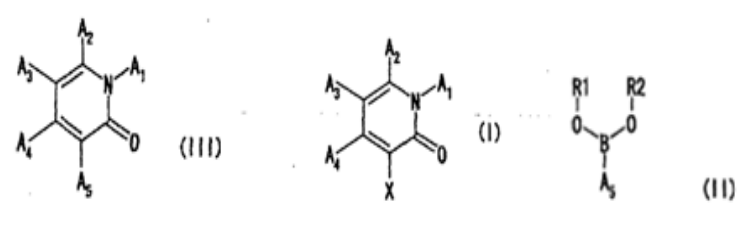
Claim 1 concerned producing compound (III) and its salts by reacting compound (I) and its salts with compound (II), in the presence of a palladium compound, copper compound, phosphorus compound and alkali.
The copper compound was used at 0.001–0.2 mole per mole of compound (I). The palladium compound was palladium acetate, palladium chloride or palladium hydroxide. The copper compound was cuprous bromide, cuprous iodide, cuprous chloride or cuprous acetate.
Compared with Reference 1, claim 1 added a copper compound and specified its type and amount; Reference 1 used no copper compound. It also defined compound (II), an aryl or heteroaryl boronic acid derivative, more specifically. Reference 2 suggested using copper and cuprous compounds as cocatalysts in this type of reaction.
The applicant submitted post-filing data to show a higher reaction rate and fewer by-products. The Supreme People’s Court found that the higher reaction rate was not recorded in the original application. A high yield, which was recorded, did not necessarily imply a high reaction rate. The supplementary data was therefore not accepted.
Effects requiring experimental verification must be supported by the actual original disclosure, whether or not they are mentioned in words. Where corresponding data is absent or there is no necessary connection between the data and the stated effect, supplementary data will generally struggle to establish an unexpected effect. Recording reaction-rate data in the original description would have placed this applicant in a stronger position.
3. Conclusion
For supplementary data to be accepted, the technical effects it demonstrates must be obtainable from the original description. The data can reinforce the disclosure, but cannot supply an effect absent from it and not recognizable by a skilled person from the prior art. These rules prevent applicants from obtaining unjustified protection through later additions to the evidence, to the detriment of the public.