
1. What Is a Combination Trademark?
A combination trademark consists of two or more elements, such as words, devices, letters, numbers, three-dimensional signs or color combinations. In practice, combinations of words, devices, letters and numbers are particularly common. This article focuses on those marks.
2. Principles and methods of determining identical or similar combination trademarks
The Guidelines for Trademark Examination and Trial require marks to be assessed through separate observation, an overall comparison and a comparison of their essential elements. The assessment considers appearance, sound, meaning and overall impression from the perspective of the relevant public’s ordinary level of attention and understanding.
For combination marks, examiners first compare individual elements, such as words and devices, and then assess their positions, arrangement and combination, together with the marks’ overall appearance and impression. The following situations commonly arise.
1) Marks are treated as identical where their words, devices and arrangement are substantially the same, making them almost indistinguishable in pronunciation and overall appearance and likely to cause confusion about the source of goods or services.
2) Marks with identical or similar Chinese wording are treated as similar if confusion is likely. An exception may apply where that wording is a weak or secondary element, the overall appearances differ significantly, and consumers are unlikely to confuse the sources of the goods or services.
3) Marks with identical or similar foreign-language letters or numerals are treated as similar if confusion is likely. They may nevertheless be distinguished where their pronunciation, meaning and overall appearance differ significantly enough to avoid confusion.
4) Similarity may arise where the Chinese wording of one mark has the same or a similar meaning as the foreign-language wording of another, creating a likelihood of confusion. An exception may apply where their composition, pronunciation and overall appearance differ significantly enough to avoid confusion.
5) Identical or similar devices may make two marks similar if confusion is likely. However, a device may carry little distinctive weight if it is commonly used for the goods or serves mainly as decoration or a background. If the marks’ meaning, pronunciation or overall appearance otherwise differs clearly enough to avoid confusion, they may be considered dissimilar.
6) Even where the words and devices differ, marks may be similar if the arrangement of their elements or their overall presentation is substantially the same, producing a similar appearance or meaning and a likelihood of confusion.
3. Case analysis
These principles cannot be applied mechanically because each mark and its circumstances differ. The following cases illustrate how the assessment operates in practice.
The first four applications were initially refused because of earlier marks, but the marks were found to be dissimilar on review.
【Case 1】

Applied trademark:
(No. 36437727)

Cited trademark:
(No. 15790855)
Comments: Although the devices are similar to some extent, they are not the marks’ dominant identifying elements. The words occupy prominent positions and differ sufficiently to distinguish the marks.
【Case 2】

Applied trademark:
(No. 30714137)
Cited trademark:
(No. 19202920)
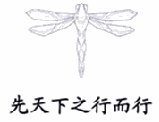
Comments: The words are the distinctive identifying elements, and they differ significantly in pronunciation and meaning. The applied-for mark uses a relatively abstract device, whereas the cited mark is more realistic. The distinctive elements and overall visual impressions are readily distinguishable, so the marks are not similar.
【Case 3】
Applied trademark:
(No. 35497332)

Cited trademark:
(No. 10638721)
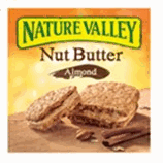
Comments: Both marks contain “Almond,” but that word is not a distinctive identifying element of the applied-for mark. Its distinctive element, NATURE VALLEY, differs completely from that of the cited mark. Pronunciation, color and overall appearance also distinguish the marks.
【Case 4】
Applied trademark:
(No. 42915504)

Cited trademark:
(No. 21577633)
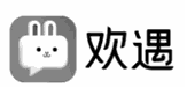
Comments: The cartoon faces have some similarities, but they are not the marks’ distinctive identifying elements. The words are the most distinctive elements and differ clearly in pronunciation and meaning, so the marks are not similar.
Unlike the above cases, the following cases were rejected during the application stage due to similarity to prior trademarks, and were still determined to be similar trademarks during the review process.
【Case 5】

Applied trademark:
(No. 34022984)
CAT
Cited trademark: (No. 4511287)
Comments: “CEAT” is the distinctive identifying element of the applied-for mark, but the design of the letter “e” makes it easy to read as “cat,” matching the cited mark. The distinctive elements are similar in their letters and pronunciation, so the marks are similar.
【Case 6】

Applied trademark:
(No. G1333299)
Cited trademark:
(No. G1030061)
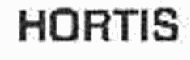
Comments: “HORTI,” the distinctive identifying element of the applied-for mark, is substantially the same as “HORTIS” in the cited mark and is difficult to distinguish in pronunciation and meaning. The applied-for mark’s device serves as background decoration and is less distinctive. The marks are therefore similar.
【Case 7】

Applied trademark:
(No. 49746043)

Cited trademark:
(No. 35617457)
Comments: “THE GOOD” is the distinctive identifying element of the applied-for mark, while “good” is also distinctive in the cited mark. There is no significant difference in pronunciation or meaning. Although the cited mark contains Chinese characters, consumers are likely to identify it by the more readily pronounced English element. The marks are therefore similar.
4. Summary
Although trademark similarity involves an element of judgment, the cases suggest several useful principles.
First, abstract devices and background or decorative graphics usually have less identifying power. More specific, detailed and distinctive designs are more likely to serve as recognizable identifying elements.
Second, words are more likely than devices to serve as distinctive identifying elements because they can be pronounced and carry meaning. Greater differences in meaning and pronunciation reduce the likelihood of similarity.
Third, where the shared elements are distinctive in both marks, similarity is more likely unless substantial differences in overall appearance, pronunciation or other features distinguish them.
Fourth, shared elements that are weak or secondary are less likely to make the marks similar, provided their distinctive elements, overall composition, pronunciation or appearance differ sufficiently.
5. Suggestions
The rules provide a framework for assessing identity and similarity, but they cannot cover every form of trademark. Examiners also exercise judgment when interpreting and applying them.
An applicant whose mark is refused because of an earlier mark should consider review where there are meaningful differences in the distinctive elements, overall composition, pronunciation or appearance of the marks.